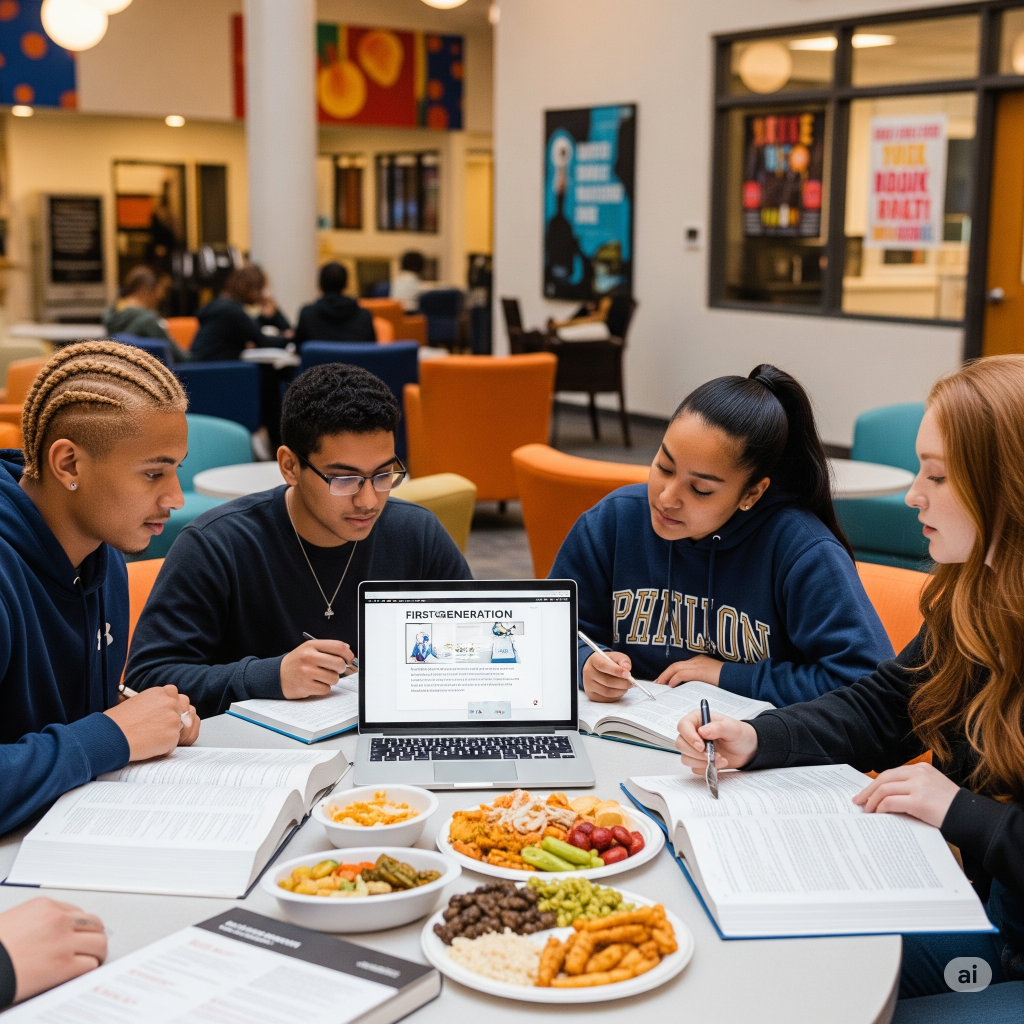
Beyond the Brochure: Reimagining University Support for First-Generation Students

ine being the first in your family to navigate the complex world of higher education. It’s a journey filled with immense hope and determination, but also “invisible hurdles” that most universities aren’t built to address. These aren’t just academic challenges; they’re deeply personal, often tied to family responsibilities and financial realities.

Consider this striking insight from my own analysis of historical CSU Channel Islands data: nearly 90% of first-generation students who showed a low likelihood of attending college had siblings still in high school. This isn’t about a lack of ambition; it’s about a profound choice to postpone their own dreams to financially support their families. This echoes Anthony Abraham Jack’s powerful work in “Class Dismissed,” which reveals how low-income students often return to home environments where they become essential, unpaid contributors, balancing academics with critical family support. Our current systems often miss this crucial context, leaving these students to shoulder burdens silently.  

To truly reimagine support for first-generation students, it is invaluable to examine international models that offer comprehensive financial and material support, allowing students to focus wholeheartedly on their education without the constant worry of family financial burdens. While direct comparative data on first-generation persistence rates between the US and Europe can be nuanced, certain European and Asian systems offer powerful insights into policy-driven approaches that go beyond tuition waivers.

Imagine a system where students receive not just free tuition, but also a monthly stipend, and support for essential needs like meals and technology. This is not a distant dream in some parts of the world.

Many countries offer robust support for higher education, significantly easing the financial burden on students. Denmark stands out with free public university tuition and monthly stipends up to $1,000 USD for living expenses. Germany also provides tuition-free public universities for all students, often supplemented by scholarships like StipendiumPlus and DAAD, offering monthly allowances ranging from approximately $920 to $1,400 USD. In France, students can receive annual grants up to $5,900 USD and housing rent subsidies, along with access to subsidized grocery stores.

These international models, which often include subsidized meals, demonstrate a systemic commitment to enabling students to focus on their academic pursuits rather than financial survival.

Now, lets talk about concrete steps we as higher education community can implement to support our students.

First-generation students often arrive on campus carrying an “invisible backpack” filled with basic needs challenges that can quietly derail their success.

In high school, many students receive free laptops and internet, ensuring they can learn. But step onto a college campus, and suddenly, owning a laptop is a personal expense – a significant, often unexpected, financial hit. While digital access is improving, a recent survey found that first-generation students are less familiar with advanced AI tools, highlighting a deeper gap than just device ownership. Some institutions and programs, like the Dell Scholars Program or Northwest Missouri State University, offer free or discounted laptops, but these are often isolated efforts, not a universal safety net. We need to integrate technology provision directly into financial aid, recognizing it as a fundamental tool for learning, not a luxury.  

For many, K-12 schools provided a crucial safety net against hunger through free meal programs. That safety net vanishes in college, forcing students to find new ways to simply eat. Food insecurity is a silent crisis on campuses, impacting well-being and academic focus. While on-campus food pantries and advocacy for programs like SNAP are vital steps, they often act as emergency measures rather than foundational support. Universities must integrate basic needs like food into their core student support, ensuring consistent, dignified access to nutritious meals as part of the college experience.  

Our traditional definition of “college readiness” often overlooks the incredible skills first-generation students develop outside the classroom. It’s time to recognize and celebrate these unique strengths.

Many first-generation students work through college, not for pocket money, but to financially support their families. This “family work”—managing budgets, caregiving, problem-solving under pressure—builds immense skills, yet these rarely make it onto a traditional resume. Anthony Abraham Jack urges us to “recognize the valuable skills gained from low-income students’ unpaid family support and create opportunities for them to incorporate this experience into their resume building.” Practical frameworks like the STAR method can help students translate these real-world experiences into compelling, resume-worthy assets, showcasing their grit and resilience as professional strengths. This requires a cultural shift: universities must actively train career services and faculty to see and champion these non-traditional skills.  

Many first-generation students tend to underestimate themselves and feel timid approaching faculty or pursuing opportunities like TA positions. This often stems from imposter syndrome and a lack of familiarity with academic norms. They report less faculty contact and are less likely to ask for help. This isn’t about students being unaware of office hours; it’s a deeper psychological barrier. Universities need to proactively normalize and demystify faculty interactions. This means faculty explicitly inviting engagement, sharing their own first-generation identities (if applicable), and creating low-stakes, structured opportunities for interaction, making the environment “inviting,” not just “available.”  

Beyond addressing immediate needs, universities must actively build strong connections for first-generation students through proactive engagement and robust mentorship. Instead of simply pointing students to generic job fairs, imagine faculty directly reaching out to first-generation students for specific opportunities like TA roles or research assistantships. This direct invitation can bypass timidity and open doors to invaluable experiences. Mentorship programs, especially those connecting new students with upperclassmen or faculty who share their first-generation identity, are consistently effective. Universities should formalize and incentivize culturally responsive faculty mentorship, making it a recognized part of faculty service and professional development.  

A strong sense of community and belonging is crucial for first-generation student success and persistence. Peer-to-peer mentorship and dedicated support groups foster solidarity and shared experiences. While technology can ease access to resources like tutoring and mental health services, actual utilization remains low, highlighting a need for better awareness and engagement strategies. Universities need a “no wrong door” approach, where all support services are integrated, promoted, and culturally responsive, ensuring students feel comfortable accessing them without stigma.  

The challenges faced by first-generation students are not individual failings; they are systemic issues embedded within higher education. To truly fulfill their promise as engines of social mobility, universities must fundamentally reimagine their support systems.

Key Recommendations for Universities:

  • Acknowledge and Address Systemic Barriers: Recognize the unique financial, social, and psychological hurdles first-generation students face, often tied to profound family responsibilities. Move beyond a deficit-based view to one that champions their strengths and addresses systemic obstacles.
  • Prioritize Basic Needs as Foundational: Integrate essential support for basic needs, like laptop provision and food security, directly into comprehensive financial aid and student services. Shift from reactive, emergency measures to proactive, dignified solutions.
  • Redefine “Readiness” and Value Lived Experience: Actively help first-generation students translate their informal work and family responsibilities into valuable, resume-worthy skills. Train career services and faculty to recognize and champion these unique assets.
  • Foster Proactive Engagement and Mentorship: Encourage and incentivize faculty to directly engage with first-generation students, offering tailored mentorship and opportunities. This inviting approach can overcome student timidity and build crucial relationships.
  • Learn from Global Models: Adopt a more systemic, policy-driven approach to first-generation student success, drawing inspiration from international examples that prioritize integrated support and a campus-wide culture of inclusion.

Supporting first-generation students isn’t just about providing access; it’s about cultivating an environment where they can not only survive but truly thrive. By embracing these recommendations, universities can empower a generation of diverse, resilient leaders, fulfilling their promise as powerful engines of social mobility for all.

Leave a Reply

Discover more from Strategic Campus

Subscribe now to keep reading and get access to the full archive.

Continue reading